
French Drain Installation Cost 2026 (Complete Price Breakdown)
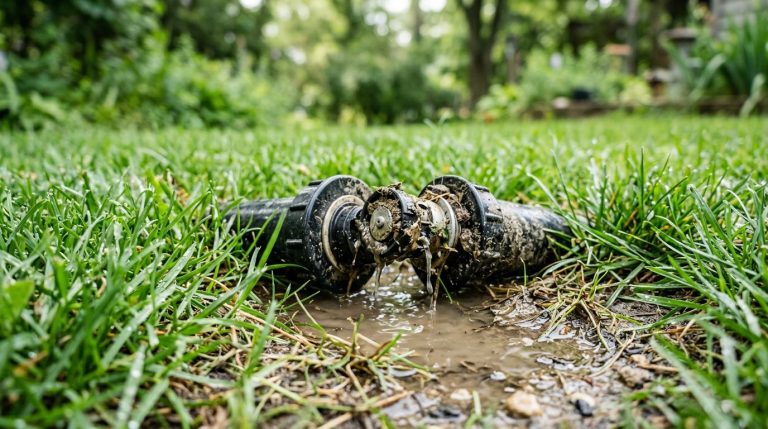
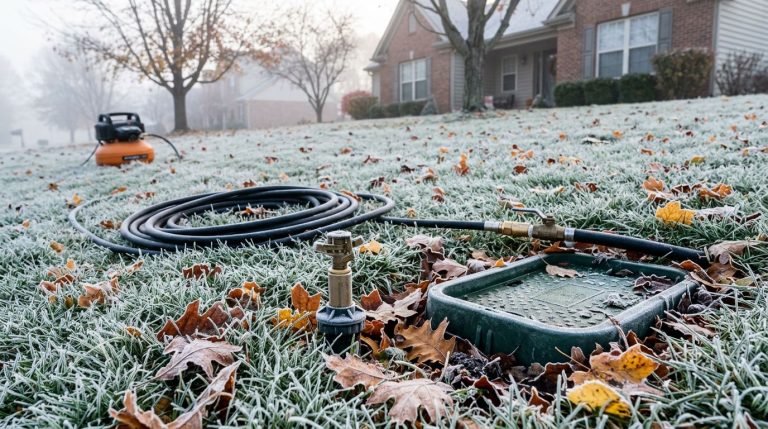
If you have water pooling in your yard or a soggy foundation after every big Texas rain, a French drain might be exactly what you need. But before you commit, you probably want to know one thing: how much is this going to cost? At Waterworks Sprinklers in Crosby, we install French drains all across the Houston area, and the question of French drain installation cost comes up in almost every conversation.
So we put together this complete price breakdown for 2026. We will walk you through average costs, the factors that move the price up or down, interior versus exterior options, DIY versus hiring a pro, and a few smart ways to save money. Let us dig in.
How Much Does French Drain Installation Cost in 2026?
In 2026, most homeowners spend somewhere between $1,500 and $7,000 for a professionally installed French drain. The wide range comes down to size, location, and how complicated your yard is. A short exterior drain in an open yard sits on the low end. A long interior system with a sump pump lands on the high end.
On a per-foot basis, expect to pay roughly $25 to $75 per linear foot for exterior drains. Interior drains cost more because they often involve breaking up concrete. Here is a quick snapshot of typical price points:
- Short exterior French drain (up to 25 feet): $800 to $2,000
- Standard exterior French drain (50 to 100 feet): $2,000 to $5,000
- Large or complex exterior system (over 100 feet): $5,000 to $9,000
- Interior basement or slab drain: $3,000 to $7,000 or more
- French drain with sump pump added: add $600 to $2,000
Keep in mind that Houston-area soil is heavy clay, which can affect digging time and drainage design. That is why local experience matters so much.
What Factors Affect French Drain Installation Costs?
No two yards are the same. Several things influence what you will pay, and understanding them helps you plan a realistic budget. If you are getting a quote for French drain installation in Houston, these are the factors that shape the final number.
Length and Depth of the Drain
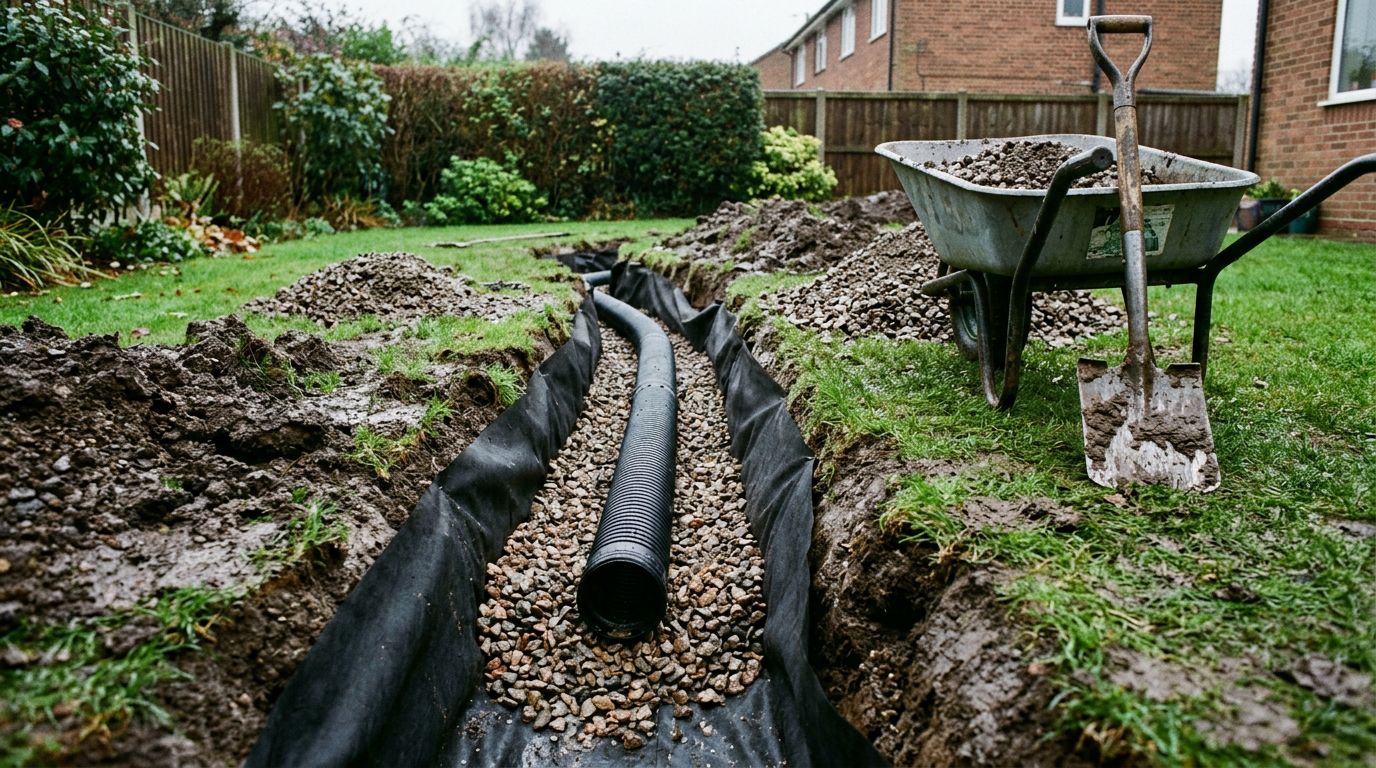
This is the biggest cost driver. Longer drains need more pipe, more gravel, and more labor. Deeper trenches take more time to dig and often require special equipment. A drain that runs the full length of your property will naturally cost more than a small one near a single problem spot.
Soil and Ground Conditions
Around Crosby, Baytown, and Houston, clay soil is common. Clay holds water and can be tough to dig through. Rocky ground or tree roots slow the work even more. Harder digging means more labor hours, which raises the price.
Interior vs Exterior Placement
Exterior drains are installed in your yard. Interior drains go inside, usually along a foundation or in a basement. Interior work often means cutting concrete, which adds a lot of cost and labor.
Accessibility of the Work Area
If your problem area is easy to reach, the job goes faster. Tight spaces, fences, patios, and landscaping can block equipment. When crews have to hand-dig or work around obstacles, the timeline and cost go up.
Drainage Outlet and Water Volume
Where does the water go once it is collected? Sometimes a simple gravity outlet works. Other times you need a sump pump or a pop-up emitter. The more water you are managing, the more robust the system needs to be.
Permits and Local Requirements
Some cities require permits for drainage work, especially when connecting to storm systems. Permit fees vary by area and add a small but real cost to the project.
Interior vs Exterior French Drain Cost Comparison
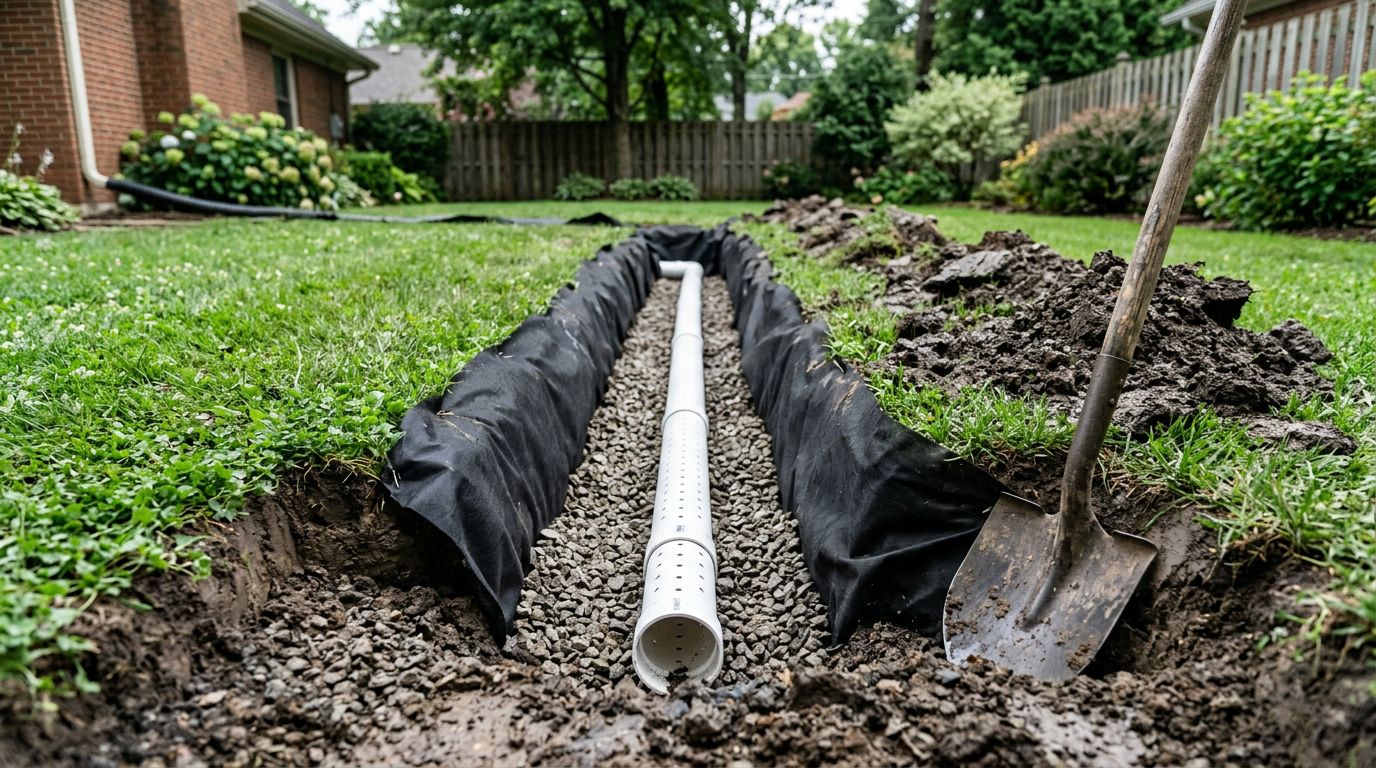
One of the first decisions you will make is whether you need an interior or exterior French drain. Exterior drains handle surface water and yard flooding. Interior drains manage water that has already made its way toward or under your foundation. Interior systems almost always cost more because of the concrete work involved. If you are exploring options for French drain installation in Humble, here is how the two compare side by side.
| Feature | Exterior French Drain | Interior French Drain |
|---|---|---|
| Typical Cost | $1,500 to $5,000 | $3,000 to $7,000+ |
| Cost Per Linear Foot | $25 to $75 | $50 to $100+ |
| Main Purpose | Yard flooding and surface water | Foundation and slab water |
| Concrete Cutting | Usually not needed | Often required |
| Installation Time | 1 to 3 days | 2 to 5 days |
| Disruption to Home | Low | Moderate to high |
| Sump Pump Needed | Sometimes | Often |
For most Houston-area homes dealing with yard pooling, an exterior drain is the practical and affordable choice. Interior drains come into play when water is threatening the structure of your home.
DIY vs Professional French Drain Installation Costs
It is tempting to save money by installing a French drain yourself. And yes, DIY can lower your out-of-pocket cost. But there are real trade-offs. A French drain done wrong can make water problems WORSE, so it pays to weigh both sides. When you compare quotes for French drain installation in Baytown, factor in the value of getting it right the first time.
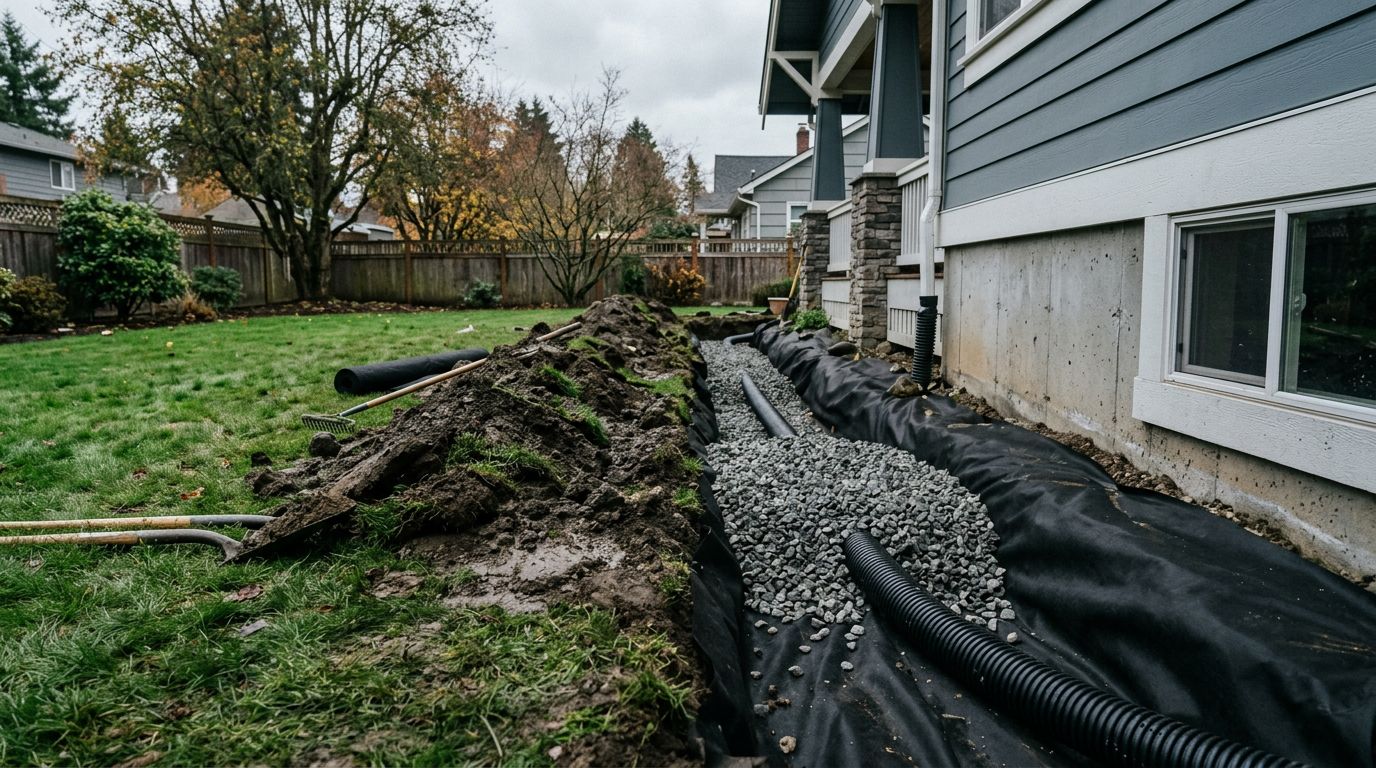
- DIY material cost: Roughly $500 to $1,500 for pipe, gravel, fabric, and rentals on a mid-size job.
- DIY hidden costs: Trencher rental, gravel delivery, disposal of dirt, and your own time and labor.
- DIY risks: Wrong slope, clogged pipe, poor outlet placement, and hitting utility lines. Any of these can cost you more later.
- Professional cost: $1,500 to $7,000 depending on the project, but includes labor, proper grading, and quality materials.
- Professional benefits: Correct slope, proper drainage design, faster completion, and less chance of a redo.
Here is the honest truth. A French drain relies on a precise slope, usually about one inch of drop per eight feet. If the grade is off, the water sits in the pipe and the whole system fails. That precision is where professional installation earns its keep. For a small, simple drain, DIY can work. For anything near a foundation or on a slope, hiring a pro is the smarter move.
What Is the Cost of French Drain Materials and Labor?
Understanding where your money goes makes the total price feel a lot less mysterious. A French drain project is roughly split between materials and labor, with labor usually making up the larger share. Here is a breakdown of the main cost pieces in order of typical importance.
- Labor: Often 50 to 70 percent of the total. Digging trenches, setting pipe, backfilling, and finishing take significant time, especially in clay soil.
- Perforated pipe: The core of the system. Expect around $1 to $5 per foot depending on the pipe type and diameter.
- Gravel or drainage stone: A big volume item. Costs run about $30 to $70 per cubic yard, plus delivery.
- Landscape fabric: Wraps the gravel and pipe to keep out soil and roots. Usually $0.25 to $1 per square foot.
- Catch basins and fittings: These collect water at problem spots. Each basin and fitting adds $20 to $150.
- Sump pump (if needed): A pump plus installation can add $600 to $2,000 to the project.
- Outlet or pop-up emitter: A simple emitter is inexpensive, but longer discharge runs add pipe and labor.
- Permits and disposal: Permit fees vary, and hauling away excavated dirt can add a modest cost.
When you add these together, you can see why the total swings so widely. A short gravity-fed drain with basic materials is affordable. Add a sump pump, a long run, and tough digging conditions, and the price climbs fast.
How to Save Money on French Drain Installation
Nobody wants to overpay. The good news is there are several legitimate ways to keep your French drain cost under control without cutting corners on quality. A few smart choices up front can save you real money and prevent expensive problems down the road.
- Get multiple quotes. Prices vary between contractors. Comparing a few gives you a fair sense of the market rate in your area.
- Address the root problem first. Fix gutters, downspouts, and grading. Sometimes small changes reduce how much drainage you actually need.
- Combine projects. If you are already having sprinkler or landscape work done, bundling drainage into the same visit can save on labor and setup.
- Choose the right size. A drain that is bigger than necessary wastes money. A proper assessment matches the system to your actual water problem.
- Keep the work area clear. Moving planters, cleaning up the yard, and providing easy access can cut labor time.
- Schedule during a slower season. Demand often spikes right after heavy rain. Booking during a drier stretch may get you better availability.
- Maintain it once installed. Keeping the drain clear of debris protects your investment and prevents costly repairs later.
Remember that the CHEAPEST option is not always the most affordable in the long run. A poorly built drain that fails after one season ends up costing more than a quality install done right the first time. Focus on value, not just the lowest number on the quote.
Conclusion
A French drain is one of the best investments you can make to protect your yard and foundation from standing water. In 2026, most homeowners spend between $1,500 and $7,000, with the final price shaped by length, depth, soil, and whether the drain is interior or exterior. Exterior drains handle yard flooding at a lower cost, while interior systems protect your foundation for a higher price. DIY can save money on simple jobs, but professional installation gives you the correct slope and lasting results.
At Waterworks Sprinklers, we install French drains throughout Crosby, Houston, Baytown, Atascocita, Humble, Channelview, and Highlands. If soggy soil or pooling water is a problem at your home, reach out to us for a straightforward assessment and an honest quote. Let us help you keep your property dry and protected for years to come.