
Signs Sprinkler System Needs Repair 2026 (Warning Guide)
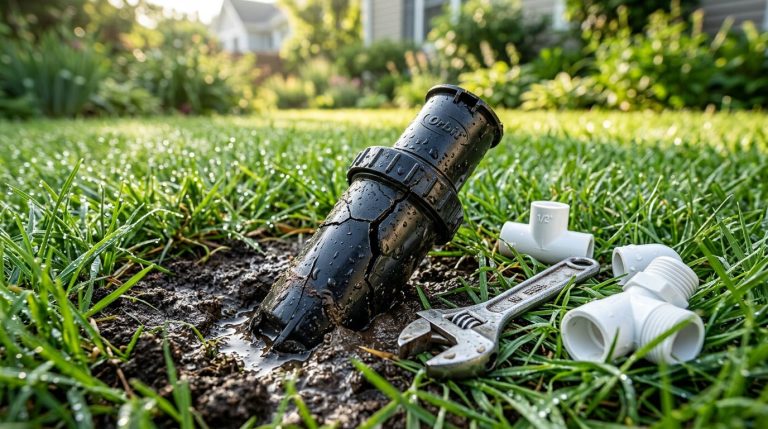
A healthy sprinkler system keeps your lawn green without you thinking about it. But when something goes wrong, the signs your sprinkler system needs repair often show up long before you notice a spike in your water bill. At Waterworks Sprinklers in Crosby, we see these warning signs every day across Houston, Baytown, Atascocita, and the surrounding areas.
The good news? Most sprinkler problems start small. Catch them early and you save money, water, and a whole lot of frustration. In this 2026 warning guide, we will walk you through the red flags to watch for, what causes them, and when it makes sense to call in a pro.
Common Warning Signs Your Sprinkler System Needs Repair
Your sprinkler system talks to you. You just have to know what to listen for. Some signs are obvious, like water shooting sideways from a broken head. Others are sneaky and slowly waste gallons of water without you noticing. Keep an eye out for these clues, especially as your system ages or after a hard Texas freeze.
- Dry or brown patches in your lawn even though the system is running.
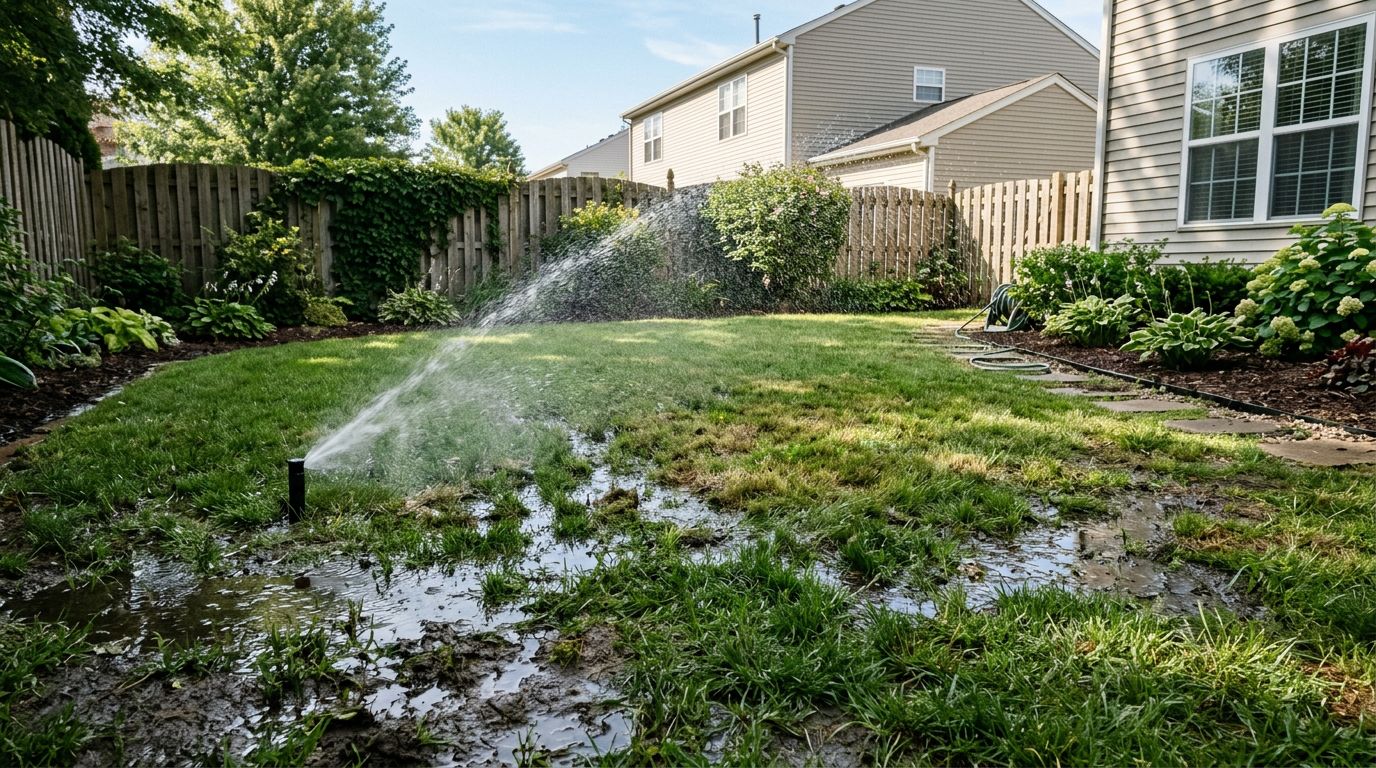
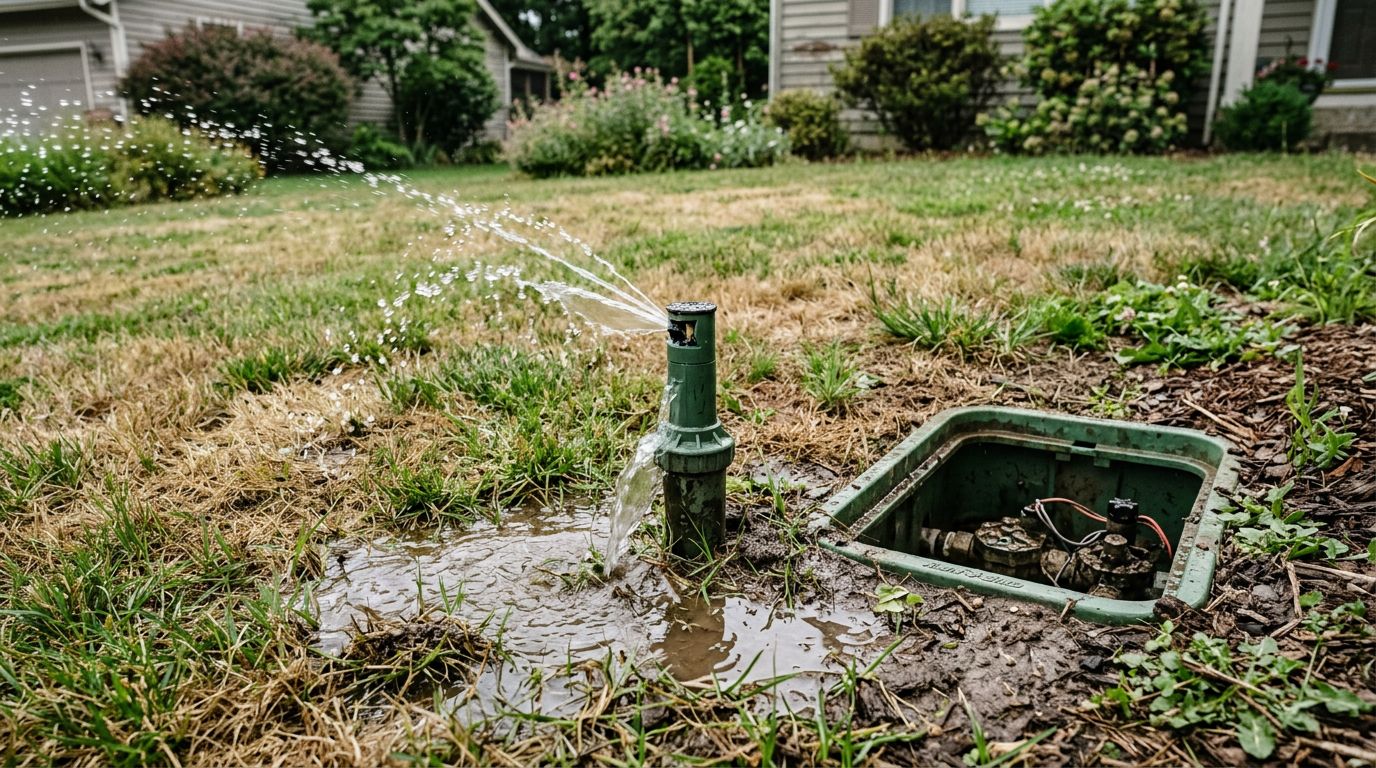
- Water pooling around sprinkler heads or in low spots of the yard.
- Sprinkler heads that will not pop up or stay stuck in the ground.
- Uneven spray patterns or heads misting instead of spraying properly.
- A sudden jump in your water bill with no change in your watering schedule.
- Zones that will not turn on when the controller says they should.
- Constantly wet or soggy areas that never seem to dry out.
- Low water pressure making the whole system weak and ineffective.
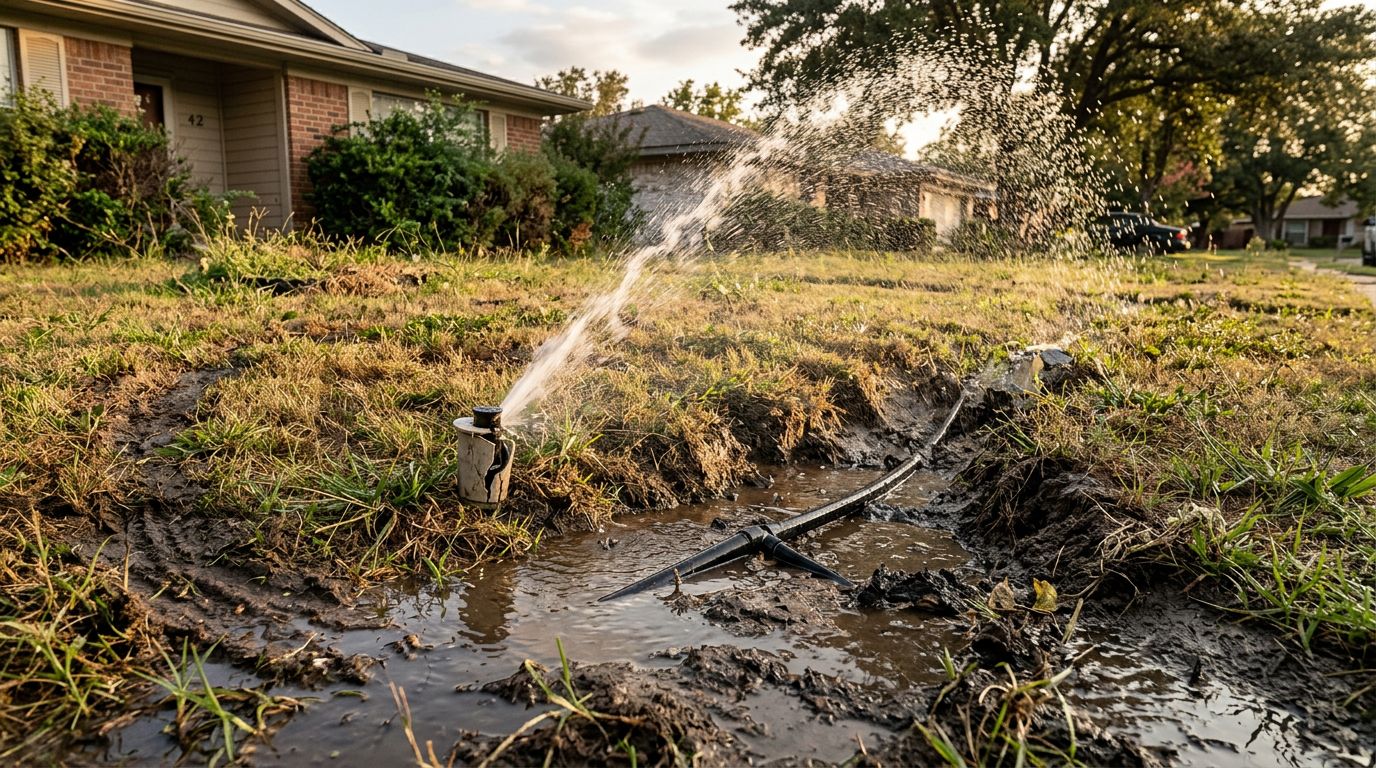
- Cracked pipes or exposed lines after digging, freezing, or heavy traffic.
If you spot a leak at a specific head, our guide on how to troubleshoot a leaking sprinkler head can help you pin down the problem before it gets worse.
What Causes Sprinkler System Damage and Failure
Understanding WHY things break helps you prevent the next problem. Here in the Gulf Coast region, sprinkler systems face a unique mix of stress. Let us break down the most common culprits.
Weather and Freeze Damage
Texas weather swings hard. We get scorching summers and the occasional deep freeze. When water sits in pipes and valves during a cold snap, it expands as it freezes. That expansion cracks pipes, splits valves, and ruins backflow devices. This is why winterization matters so much around Crosby and Baytown.
Normal Wear and Age
Nothing lasts forever. Sprinkler heads wear out. Seals dry and crack. Valves stop sealing tight. Most systems start showing their age after several years of daily use. Older components simply fail more often, and small parts add up over time.
Clogs and Debris
Dirt, sand, and mineral buildup clog nozzles and filters. When a head gets partly blocked, it sprays unevenly or mists instead of covering the zone. Hard water in our area speeds up mineral deposits, especially at the nozzle.
Physical and Root Damage
Lawn mowers, cars, and foot traffic crush heads that sit too high. Tree and shrub roots wrap around and crush buried pipes. Even aggressive landscaping can nick a line without anyone realizing it until a zone floods.
Shifting Soil and Drainage Issues
The clay soil common across Houston shifts with wet and dry cycles. That movement stresses pipes and fittings. Poor drainage also leaves standing water that damages the system and drowns your grass. Sometimes the fix is not the sprinkler at all but the drainage around it.
How to Diagnose Sprinkler Head and Valve Problems
Before you call anyone, a quick inspection tells you a lot. You do not need special tools for the basics. Just walk your yard while the system runs and follow these steps in order. Diagnosing the issue up front saves time and helps you explain the problem clearly.
- Run each zone one at a time. Use your controller to activate zones individually so you can watch each one closely.
- Watch the spray pattern. Look for heads that mist, dribble, or spray sideways. Note any dead spots the water never reaches.
- Check for pop-up problems. See if every head rises fully and retracts when the zone shuts off. Stuck heads point to debris or a worn spring.
- Inspect for pooling. Water gathering near a head often means a cracked riser or a bad seal underground.
- Test the pressure. Weak, low spray across a whole zone usually signals a pressure problem rather than a single bad head. Learn more about what causes low water pressure in sprinkler systems and how to trace it.
- Listen at the valves. A zone that will not start, or one that will not stop, often points to a stuck or failed valve at the valve box.
- Clean and recheck. Pull a clogged nozzle, rinse it, and reinstall it. If the spray improves, you found your culprit.
When to DIY vs Call a Professional Sprinkler Repair Service
Some sprinkler fixes are perfect for a weekend afternoon. Others need professional tools and know-how to avoid making things worse. Knowing the difference protects your system and your wallet. Here is how we break it down for homeowners in Crosby and nearby towns.
- DIY-friendly: Cleaning clogged nozzles, replacing a single broken pop-up head, straightening tilted heads, and adjusting spray direction.
- DIY-friendly: Clearing debris from filters and resetting a simple controller schedule.
- Call a pro: Valve failures, wiring or controller issues, and zones that will not respond at all.
- Call a pro: Underground pipe leaks, mainline breaks, and repeated low pressure across multiple zones.
- Call a pro: Backflow repair, which often has code and safety requirements you should not skip.
- Call a pro: Persistent soggy areas that may need a drainage solution instead of a sprinkler fix.
When water keeps collecting no matter how you adjust the system, the real answer might be a drainage upgrade. A properly placed French drain moves excess water away from your lawn and foundation. If you keep fighting standing water, professional help is the smart move. Our team also shares practical maintenance tips for sprinkler systems in Texas to help you keep small issues from turning into big repairs.
How Much Does Sprinkler System Repair Cost in 2026
Repair costs depend on the problem, the parts, and how much digging is involved. A single head swap is cheap. A cracked mainline is a bigger job. Prices in 2026 reflect steady demand and part availability. To help you plan, here are the general ranges we see for common repairs in the Houston area. Keep in mind these are estimates, and every system is different.
- Sprinkler head replacement: One of the most affordable fixes, usually a small per-head cost plus labor.
- Nozzle cleaning or replacement: Low cost, often bundled into a service visit.
- Valve repair or replacement: A moderate cost depending on the valve type and location.
- Pipe leak repair: Varies widely based on depth, length, and how hard the break is to reach.
- Controller or wiring repair: Ranges from minor to moderate, depending on the fault.
- Backflow repair: Priced by the device and parts needed.
- Full system inspection: A smart, low-cost step that catches problems early.
Here is a general guide to help you compare typical repair categories:
| Repair Type | Complexity | Typical Cost Range |
|---|---|---|
| Head or nozzle replacement | Low | $ |
| Valve repair | Medium | $$ |
| Underground pipe leak | Medium to High | $$$ |
| Backflow repair | Medium | $$ |
| Drainage or French drain add-on | High | $$$$ |
The best way to keep costs down is to fix problems while they are small. A stuck valve today is cheaper than a flooded zone next month.
How to Prevent Future Sprinkler System Problems
Prevention beats repair every single time. A little routine care keeps your system running strong for years. These habits are easy to build into your seasonal routine here in the Crosby and greater Houston area.
Schedule Seasonal Checkups
Inspect your system in spring before heavy watering season and again in fall before the first freeze. A quick walkthrough catches worn heads, small leaks, and misaligned spray before they become expensive problems.
Winterize Before the Freeze
Our winters are unpredictable, but freezes DO happen. Draining water from the lines and protecting the backflow device stops cracked pipes and split valves. Winterization is one of the cheapest ways to avoid the biggest freeze repairs.
Keep Heads Clean and Clear
Trim grass around heads so they pop up freely. Rinse clogged nozzles when you notice weak spray. Keep mulch and dirt from burying the heads. Clean components spray better and last longer.
Watch Your Water Bill
Your bill is an early warning system. A sudden increase with no schedule change often means a hidden leak. Catching it fast saves both water and money.
Fix Drainage Problems Early
Standing water damages your system and your lawn. If certain spots stay soggy, address drainage before it undermines your sprinkler lines or your foundation. A good drainage plan protects everything around it.
Adjust for the Season
Your lawn needs less water in cooler months. Update your controller schedule with the seasons to avoid overwatering, which wastes water and stresses the whole system.
Conclusion
Your sprinkler system rarely fails all at once. It warns you first with dry patches, weak pressure, pooling water, and rising bills. Spot these signs early, diagnose the basics yourself, and know when a repair calls for a professional. Regular maintenance and proper winterization keep the small problems from becoming big ones.
If you are seeing any of these warning signs around Crosby, Houston, Baytown, Atascocita, Humble, Channelview, or Highlands, Waterworks Sprinklers is here to help. Reach out today to get your system inspected and back to running strong for 2026.